
The Private World of the Imperial Family
A strictly private domain where the Sultan and his family lived, governed by complex traditions, architectural elegance, and deep historical resonance.
Beyond Popular Myths
The Harem (Harem-i Hümâyûn) was fundamentally a family home. Contrary to orientalist fantasies, it was a highly structured, educational, and administrative institution governed by the Valide Sultan (Queen Mother).
- Hierarchy & Order
- Education & Arts
- Private Diplomacy
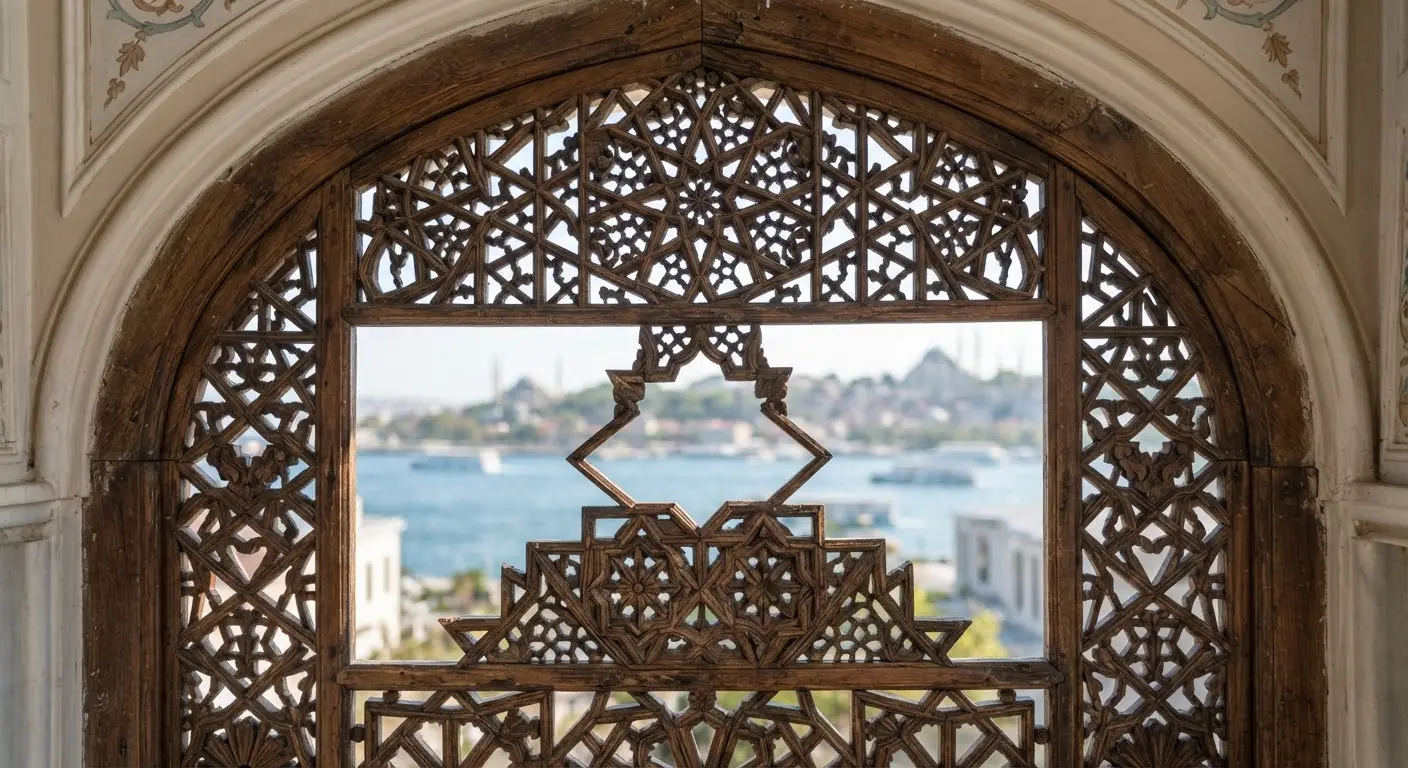
"The architecture of privacy: lattices allowed residents to observe the outside world unseen, maintaining the strict boundary between public and private spheres."
The Centers of Harem Life
While the Selamlık hosted empires, the Harem halls hosted the imperial family. These spaces reflect a blend of Ottoman tradition and European decorative arts.
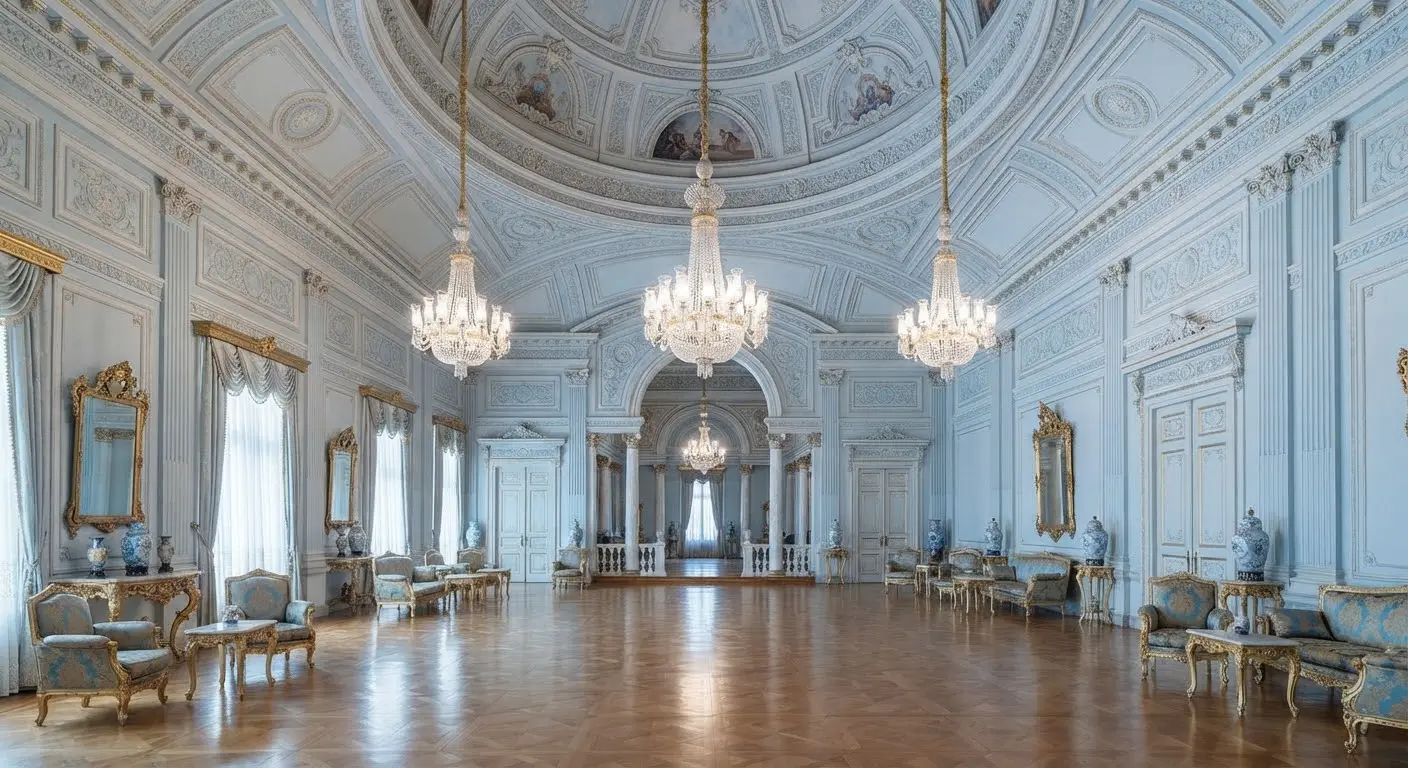
The Blue Hall
Serving as the ceremonial heart of the Harem, the Blue Hall was where the Sultan received his family on religious holidays and special occasions. Its cooler tones and grand scale reflect its official function within the private quarters.
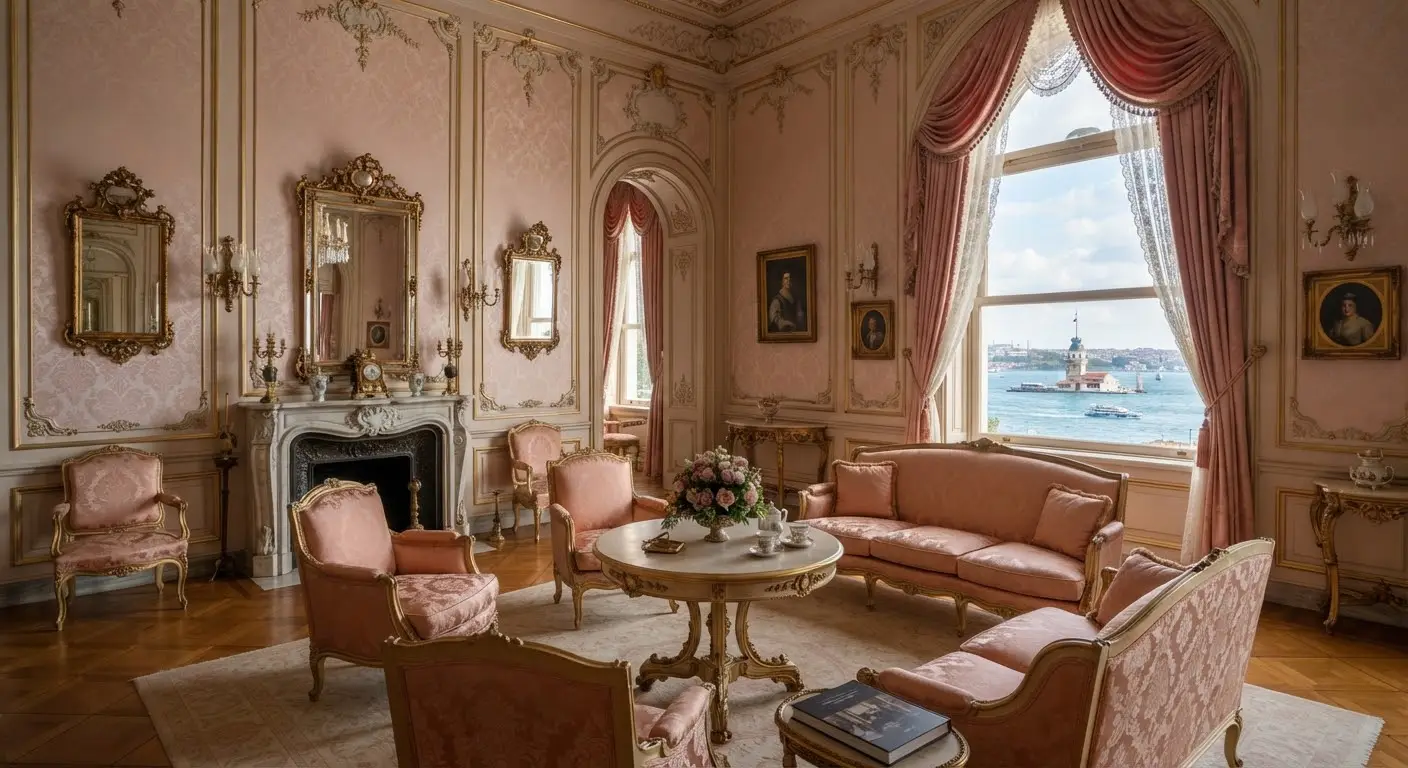
The Pink Hall
A more intimate space, the Pink Hall was the daily gathering area for the Valide Sultan and senior members of the household. Overlooking the Bosphorus, it provided a serene environment for conversation and traditional domestic arts.
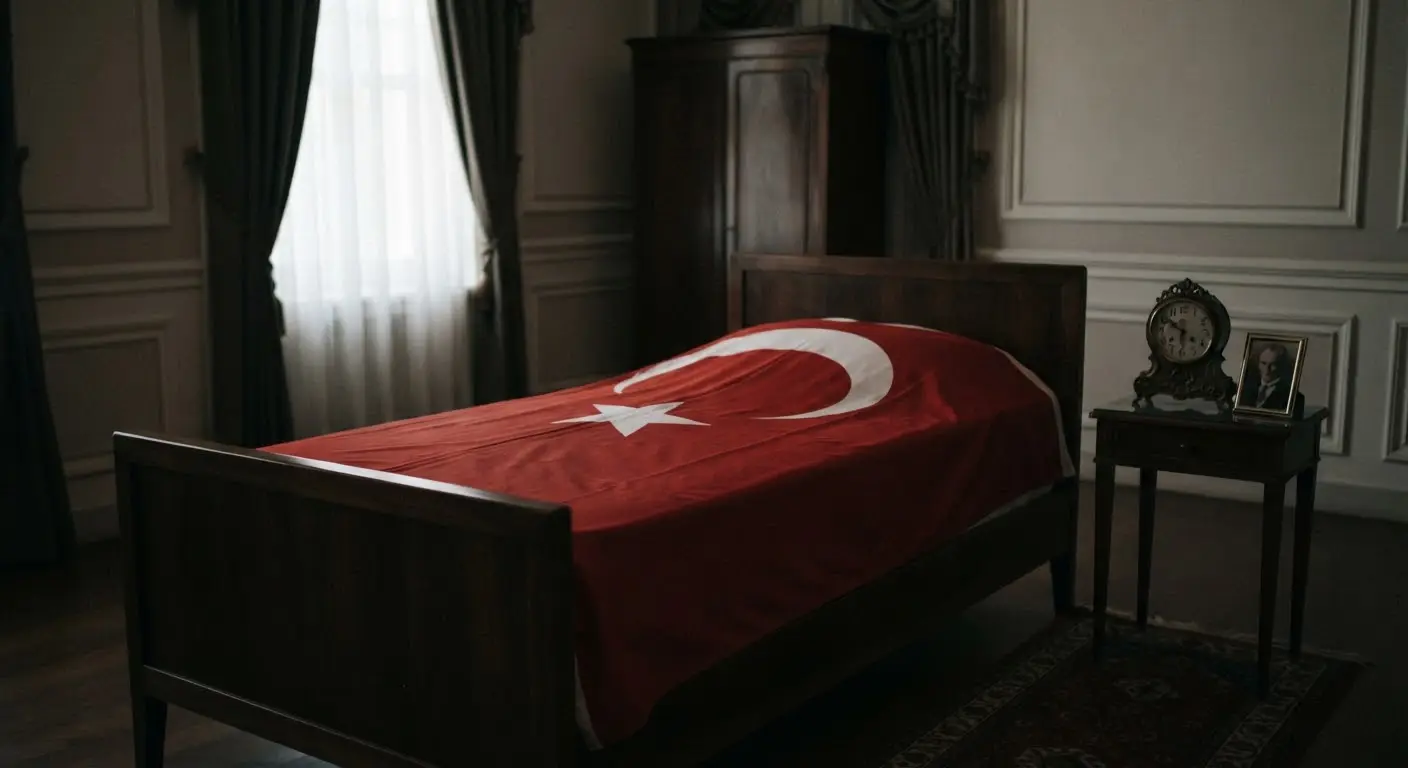
Room 71:
A Nation's Farewell
Located within the former Harem quarters, this modest room holds immense significance in modern Turkish history. It is here that Mustafa Kemal Atatürk, the founder of the Republic of Turkey, spent his final days and passed away on November 10, 1938.
The clock in this room remains perpetually stopped at 09:05, the exact moment of his passing.
Structure of the Household
The Harem was not a homogeneous group, but a deeply stratified society with strict hierarchies, protocols, and distinct spatial allocations within the palace.
Valide Sultan
The Queen MotherThe absolute authority within the Harem. She managed the internal affairs of the palace, oversaw the budget, and held significant political influence, acting as a key advisor to the Sultan. Her apartments were the largest and most ornate.
The transition to Dolmabahçe marked a modernization in Harem structure, blending traditional Ottoman hierarchy with European royal household models.
Kadınefendis
Imperial ConsortsThe recognized wives or consorts of the Sultan. They were ranked (first, second, third, etc.) and each had their own suite of rooms, personal servants, and allowance. Their status depended heavily on bearing male heirs.
Consort suites were designed sequentially along long corridors, ensuring privacy while maintaining strict proximity to the Sultan's quarters.
The Cariye
Staff & AttendantsThe vast majority of the Harem residents were female staff who received rigorous education in etiquette, music, embroidery, and administration. Many went on to marry high-ranking officials outside the palace.
The Harem functioned as a rigorous academy; literacy, music, and complex administrative skills were compulsory for higher-ranking staff.