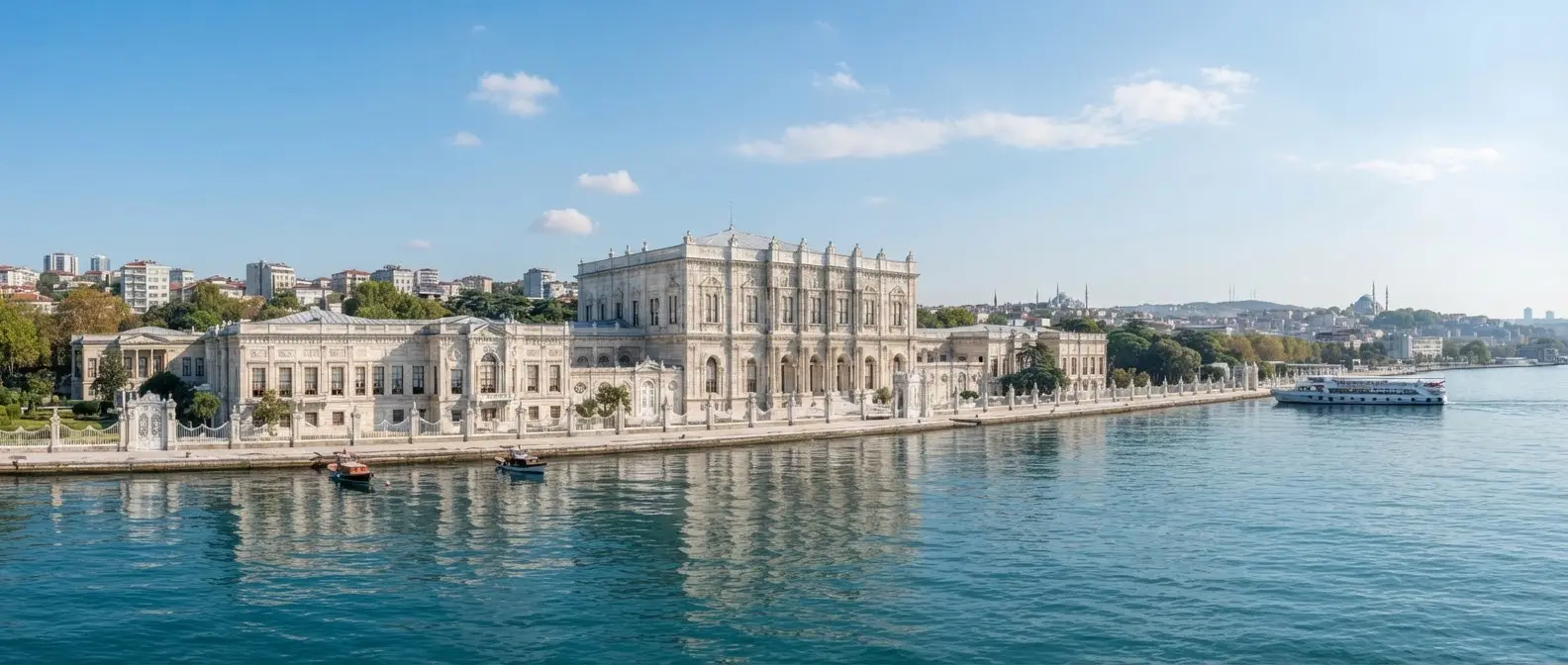
An Imperial Palace Between Two Eras
A monumental transition from the medieval Topkapı to modern European administrative grandeur on the shores of the Bosphorus.
From Imperial Gardens to a Modern Residence
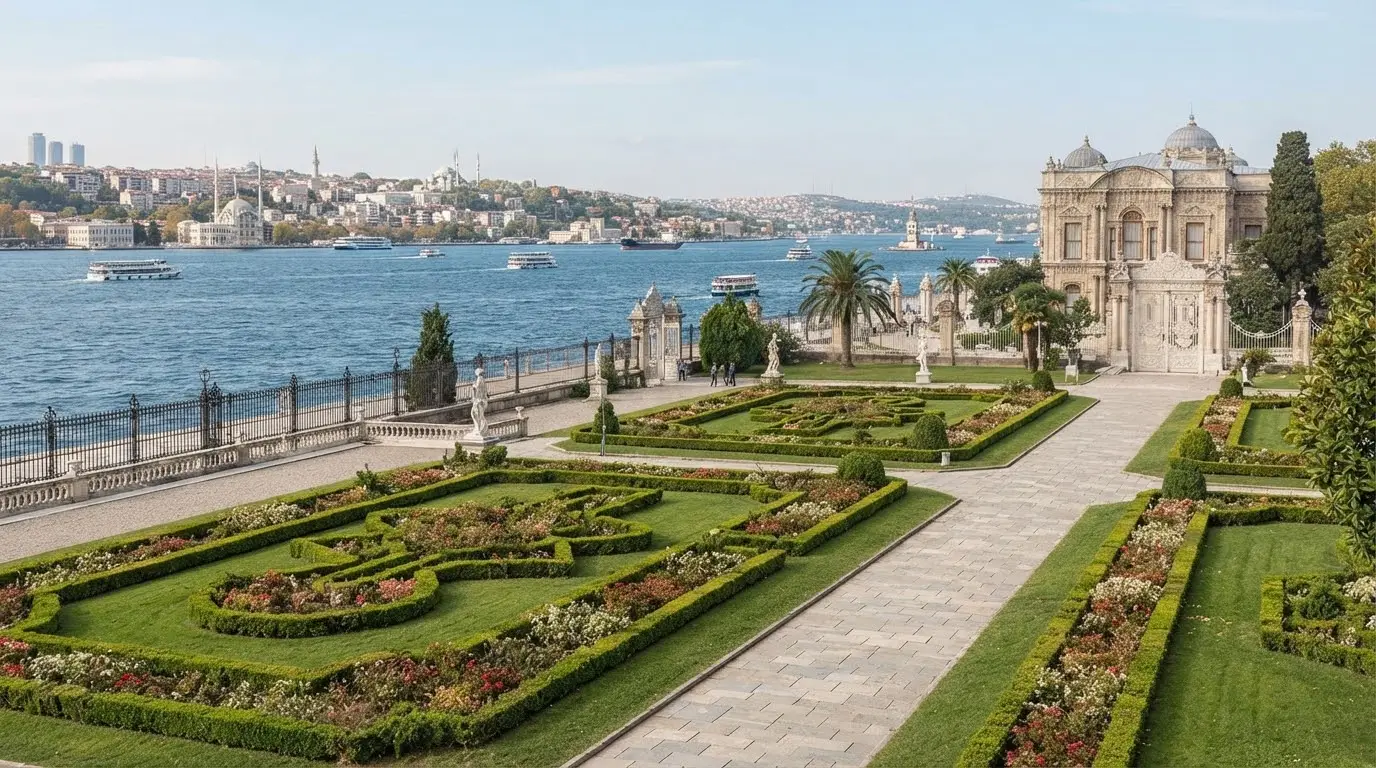
The site of Dolmabahçe was originally a bay on the Bosphorus where the Ottoman fleet anchored. Reclaimed in the 17th century, it became an imperial garden (dolmabahçe meaning "filled garden"). Over time, wooden pavilions were built here.
Seeking a modern administrative center with European comforts, Sultan Abdülmecid I commissioned the current palace in 1843, moving the seat of government away from the medieval Topkapı Palace upon its completion in 1856.
The Balyan Legacy
The palace was designed by Garabet Balyan and his son Nigoğayos Balyan, members of a prominent Armenian family of imperial architects who shaped the late Ottoman skyline of Istanbul, blending European styles with traditional spatial organization.
The Three Pillars of Power
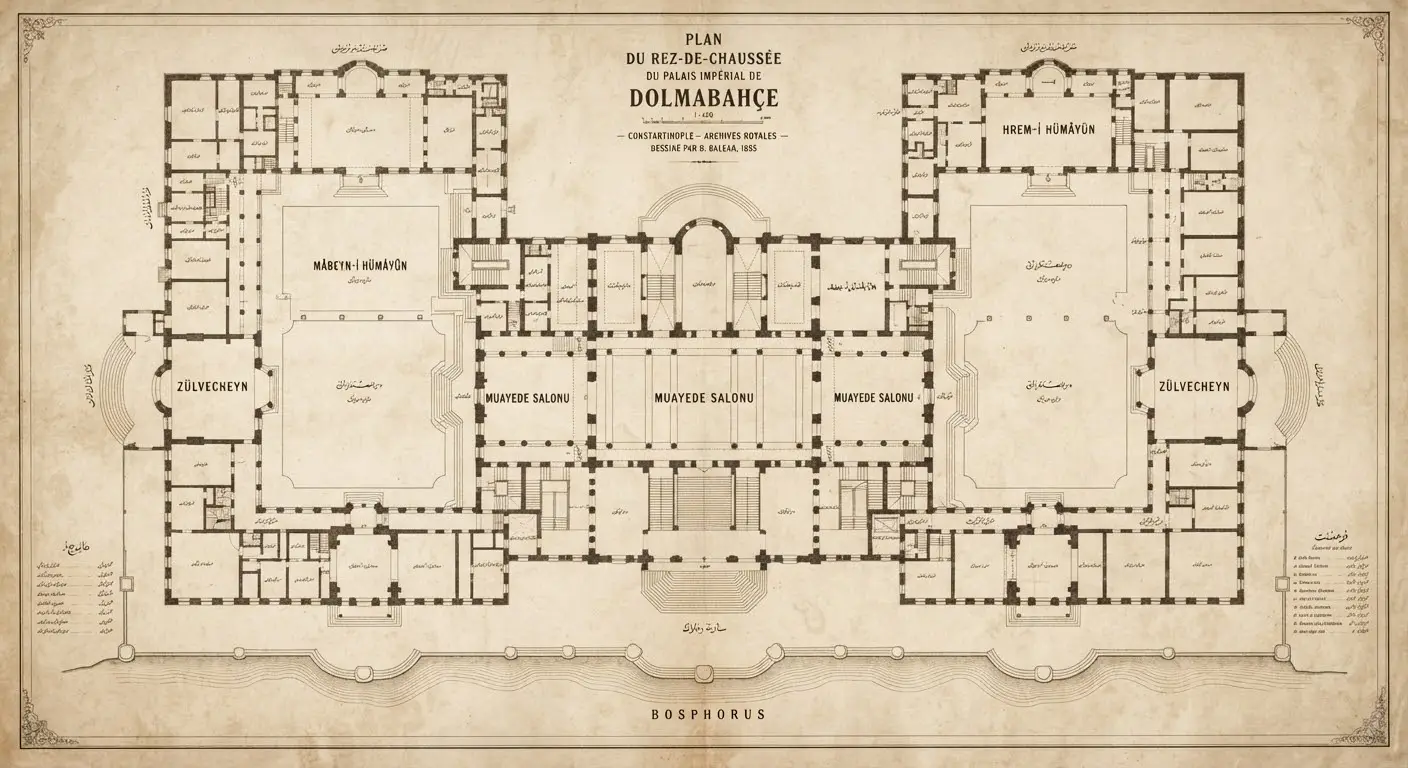
Despite its European exterior, the palace's internal layout strictly adheres to traditional Ottoman house plans, divided into three distinct functional zones.
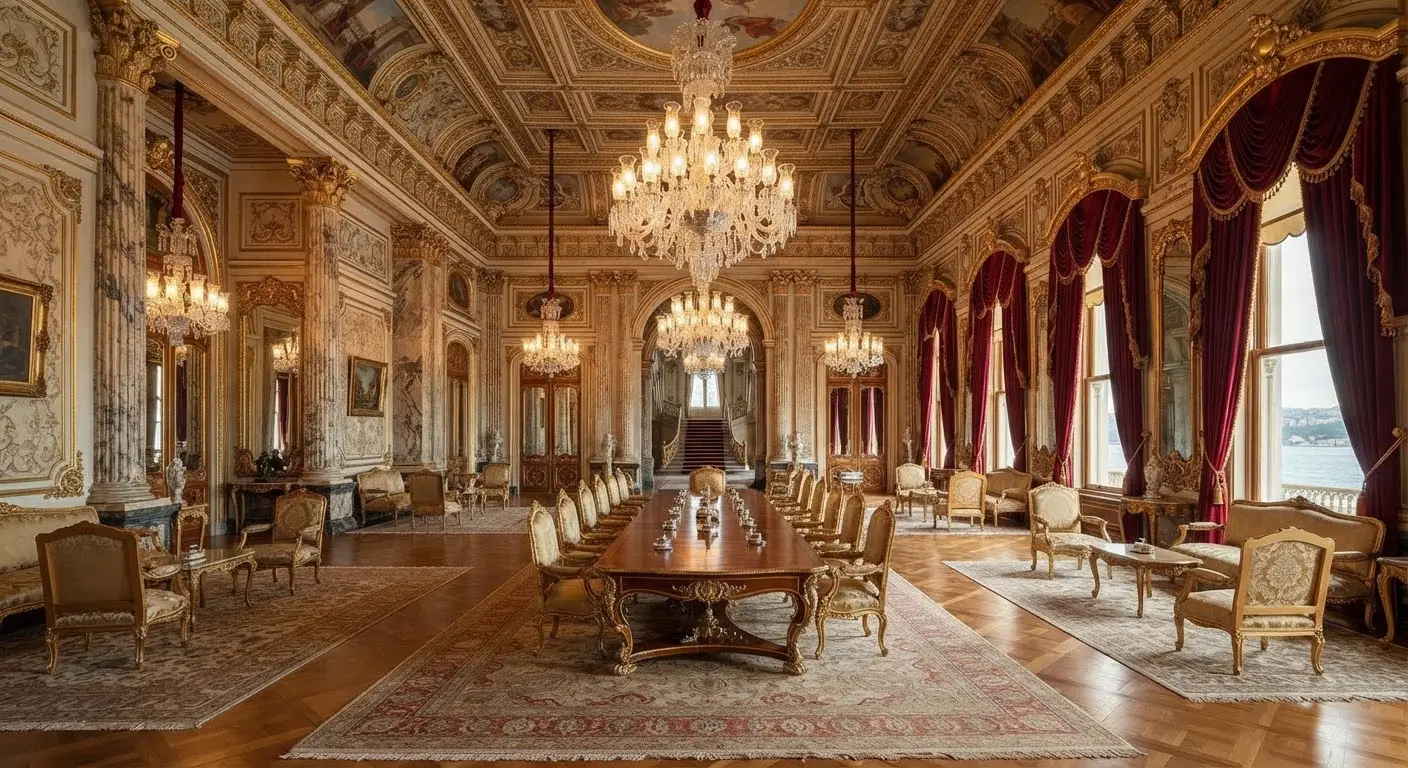
(Mabeyn-i Hümâyûn) The official and administrative quarter where the Sultan received foreign dignitaries and conducted affairs of state. This section boasts the most lavish decoration to project imperial power.
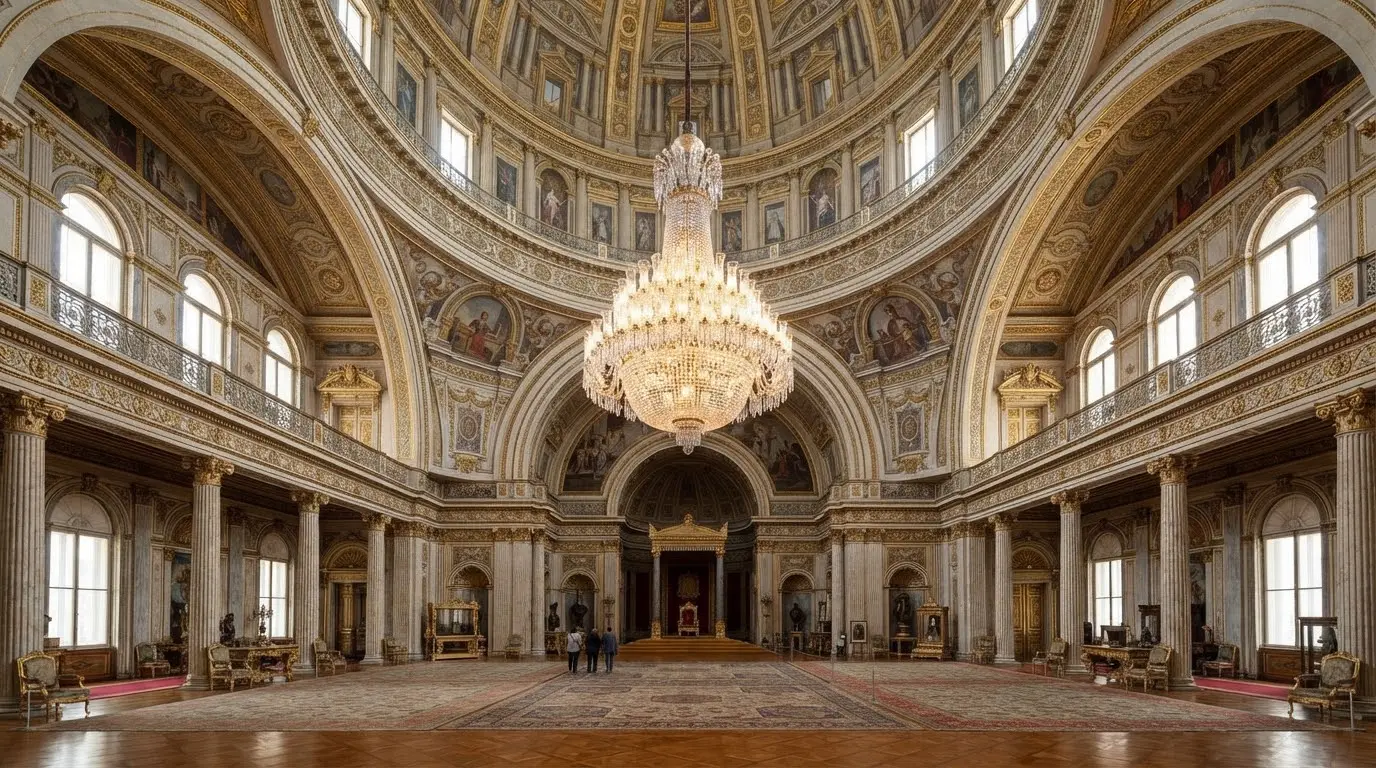
(Muayede Salonu) The grand central hall linking the Selamlık and Harem. It features a stunning 36-meter high dome and is dominated by a massive 4.5-ton Bohemian crystal chandelier. It was used for state ceremonies and banquets.
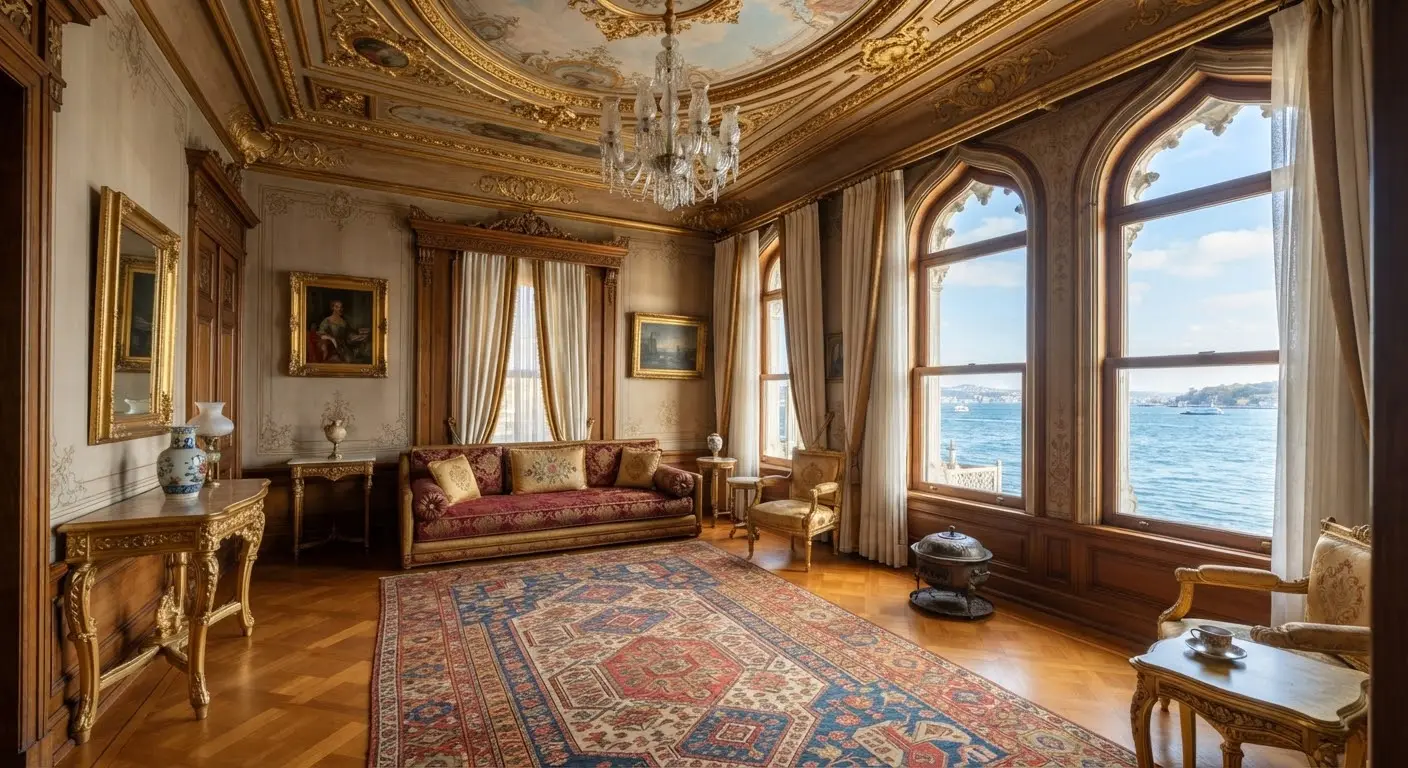
(Harem-i Hümâyûn) The private residential quarters of the Sultan and his family. While more subdued than the Selamlık, it remains a labyrinth of elegant rooms, baths, and private corridors.
An Eclectic Masterpiece
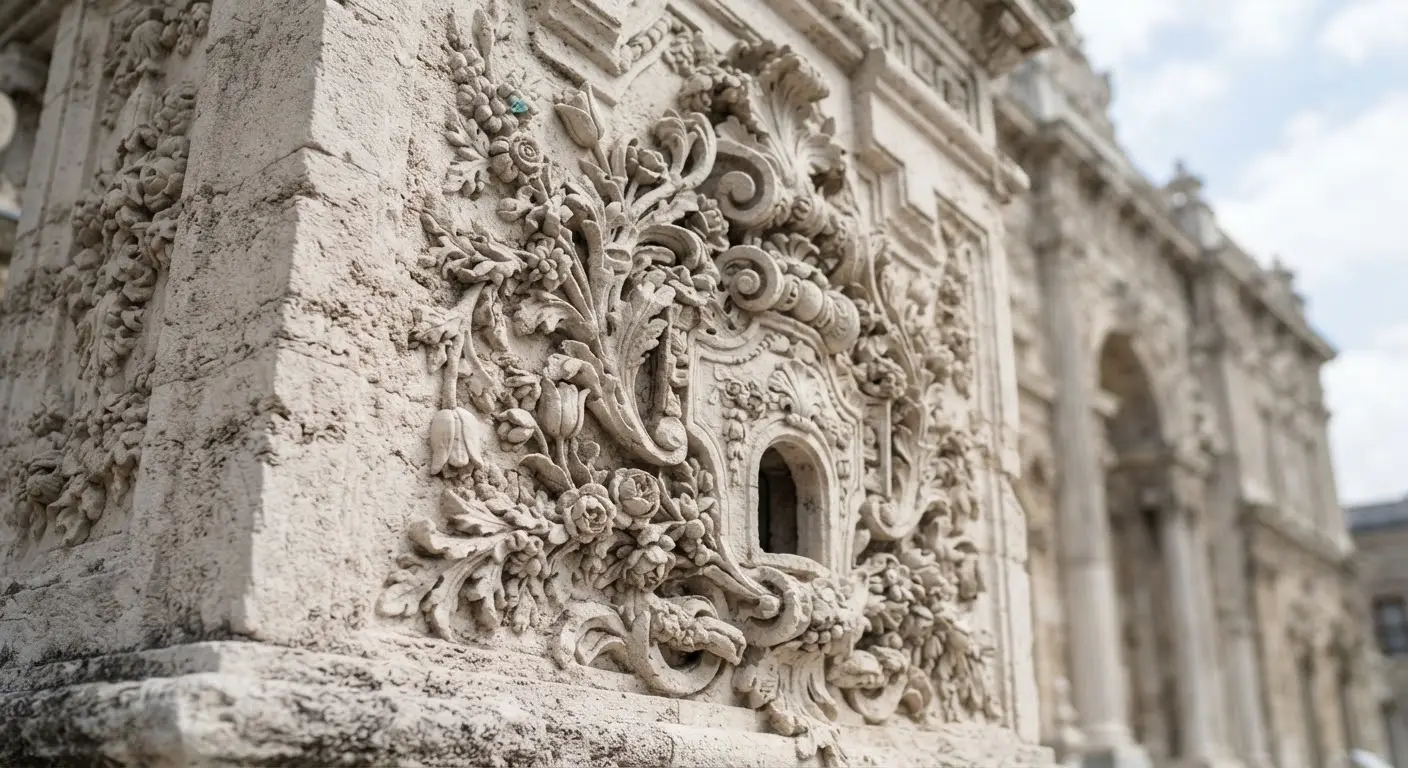
The architecture is a fascinating example of 19th-century eclecticism. The exterior blends Baroque, Rococo, and Neoclassical styles, creating a highly ornate facade. Yet, the spatial logic—rooms radiating from central halls—is distinctly Ottoman. The interiors are renowned for their extensive use of gold leaf, Baccarat and Bohemian crystal, and Hereke carpets, representing the pinnacle of late-Ottoman luxury.
The Bosphorus Façade
Stretching for 600 meters along the European shore, the palace was designed to be viewed from the water, presenting a continuous, unified classical front.